2025
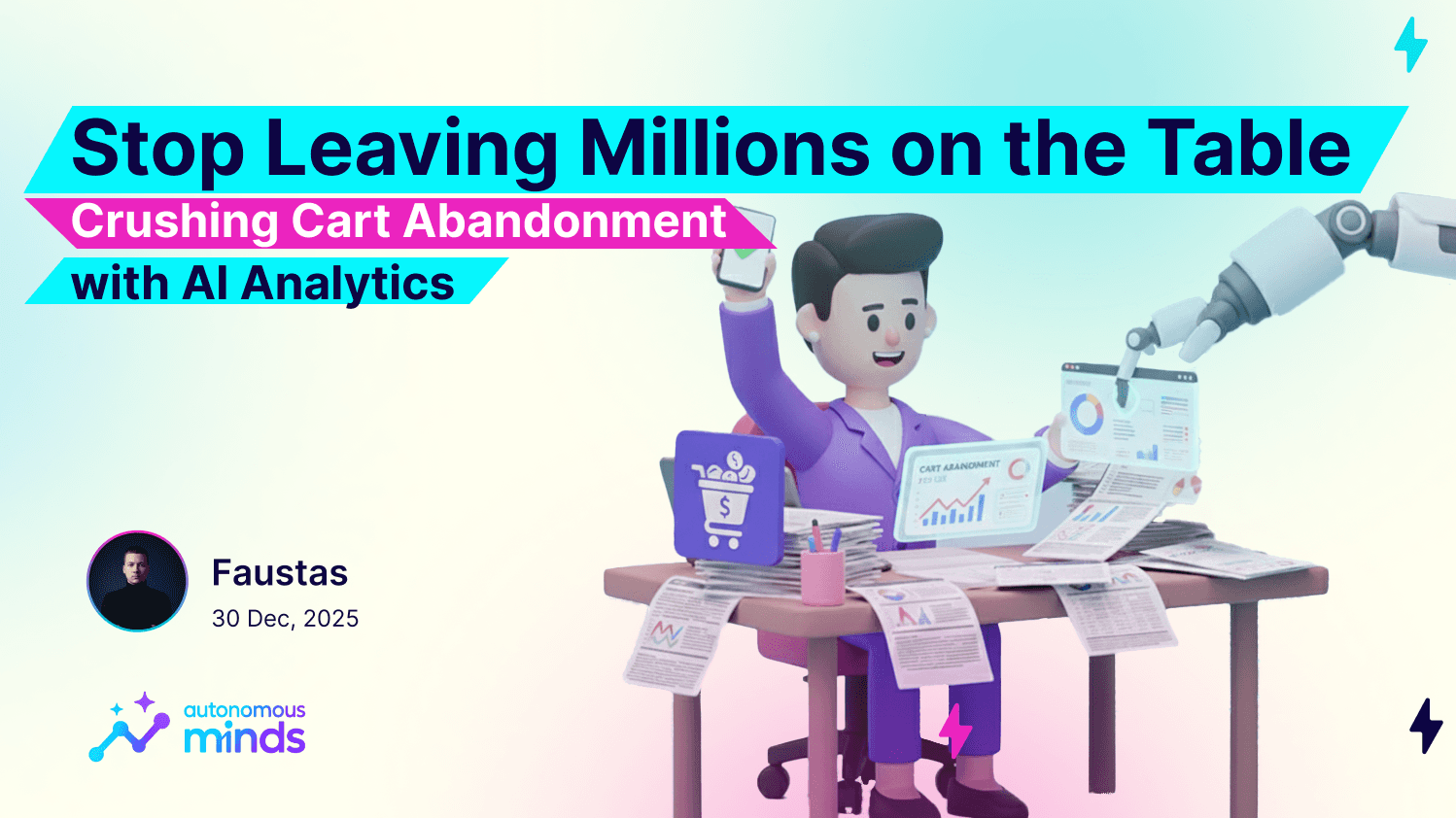
Stop Leaving Millions on the Table: The 2026 Master Guide to Crushing Cart Abandonment with AI Analytics

Faustas Rimkevičius
Founding Growth Marketer
Stop Leaving Millions on the Table: The 2026 Master Guide to Crushing Cart Abandonment with AI Analytics
As we move into 2026, the "leaky bucket" of eCommerce is no longer a problem you can ignore. While traditional retailers are still guessing why shoppers leave, the industry leaders are using AI to close the gap.
Here is your data-backed blueprint for turning "window shoppers" into loyal customers.
The State of the Cart: 2026 Reality Check
Cart abandonment is the single largest drain on digital revenue. According to the latest data from the Baymard Institute, the average global abandonment rate has reached 70.19% (Source).
The stakes are even higher for mobile-first brands. Research by Barilliance confirms that mobile abandonment frequently exceeds 80%, meaning 4 out of 5 mobile sessions end without a conversion (Source).
The "Why" Behind the Goodbye
If you don't address these three friction points, your recovery strategy will fail:
Hidden Costs (48%): Unexpected shipping and taxes are the #1 reason for exit (Baymard Institute).
Forced Registration (26%): Modern shoppers demand "Guest Checkout" speed (Statista).
The Trust Gap (25%): Without visible security and familiar payment apps, users won't enter card details (PPRO).
Beyond Basic Reports: The AI Analytics Revolution
Standard dashboards tell you what happened last week. AI Analytics tells you what is happening right now.
1. Decoding "Micro-Hesitation"
AI monitors non-linear behavior, such as a user hovering over a shipping policy three times. This signals price anxiety.
Action: AI can trigger a real-time tooltip or "Price Match Guarantee" badge to settle the doubt instantly.
2. Predictive Intent Scoring
Not all abandoners are equal. AI segments users by their Propensity to Purchase:
Window Shoppers: Receive brand-building retargeting.
High-Intent Buyers: Trigger a one-time "Free Shipping" offer or a "Complete My Order" SMS.
Winning the Recovery Game with Milo.ai
Solving abandonment isn't just a marketing task; it requires a unified team effort. Milo.ai is the AI thought partner that turns complex analytics into team-wide action.
24/7 AI Interventions: Forrester research shows that 53% of customers abandon a cart if they can’t find a quick answer (Forrester). Milo's insights can provide a view into what can be improved, keeping the sale alive.
Real-Time "Pulse" Alerts: Milo monitors your checkout flow 24/7. If a specific payment method fails or a promo code breaks, Milo alerts your team on Slack or Microsoft Teams immediately - saving thousands in "accidental" abandonment.
Analytics for Humans: Milo translates dense behavioral data into plain-English insights, telling your UX team exactly where the "friction" is located so they can fix it in hours, not weeks.
Your 2026 Implementation Roadmap
Phase | Action Item | Target Outcome |
Audit | Connect Milo.ai to your store. | Discover your true "friction points." |
Simplify | Enable Guest Checkout + Apple/Google Pay. | Reduce "Checkout Friction" by 20%+. |
Automate | Deploy AI-driven recovery emails/SMS. | Recover 10–15% of lost revenue (SaleCycle). |
Iterate | Use AI heatmaps to refine the mobile UI. | Close the 80% mobile abandonment gap. |
Conclusion: Data is the New Currency
As we head into 2026, the competitive edge belongs to retailers who act on intent, not just history. By combining deep AI analytics with a team-centric tool like Milo.ai, you stop guessing and start growing.
More insights to explore
Discover additional case studies, tips, and strategies to help your business grow and innovate faster.