The Question That Keeps Operations Leaders Up at Night
I was on a call last week with a guy who runs 23 fast food locations.
He’s been in operations for decades. Knows his business inside out. But he said something that stuck with me:
“I don’t want to be the guy who does it all on Excel.”
He doesn’t need better dashboards or more data. He was asking something simpler:
“How do I get to the point where it just tells me what I need to know?”
That’s the question I hear from every operations leader we speak to. Not “give me more reports.” Not “help me build a dashboard.” Just: tell me what matters, now, without me having to dig for it or ask some one else…
The Monday Morning Problem
Here is his current reality:
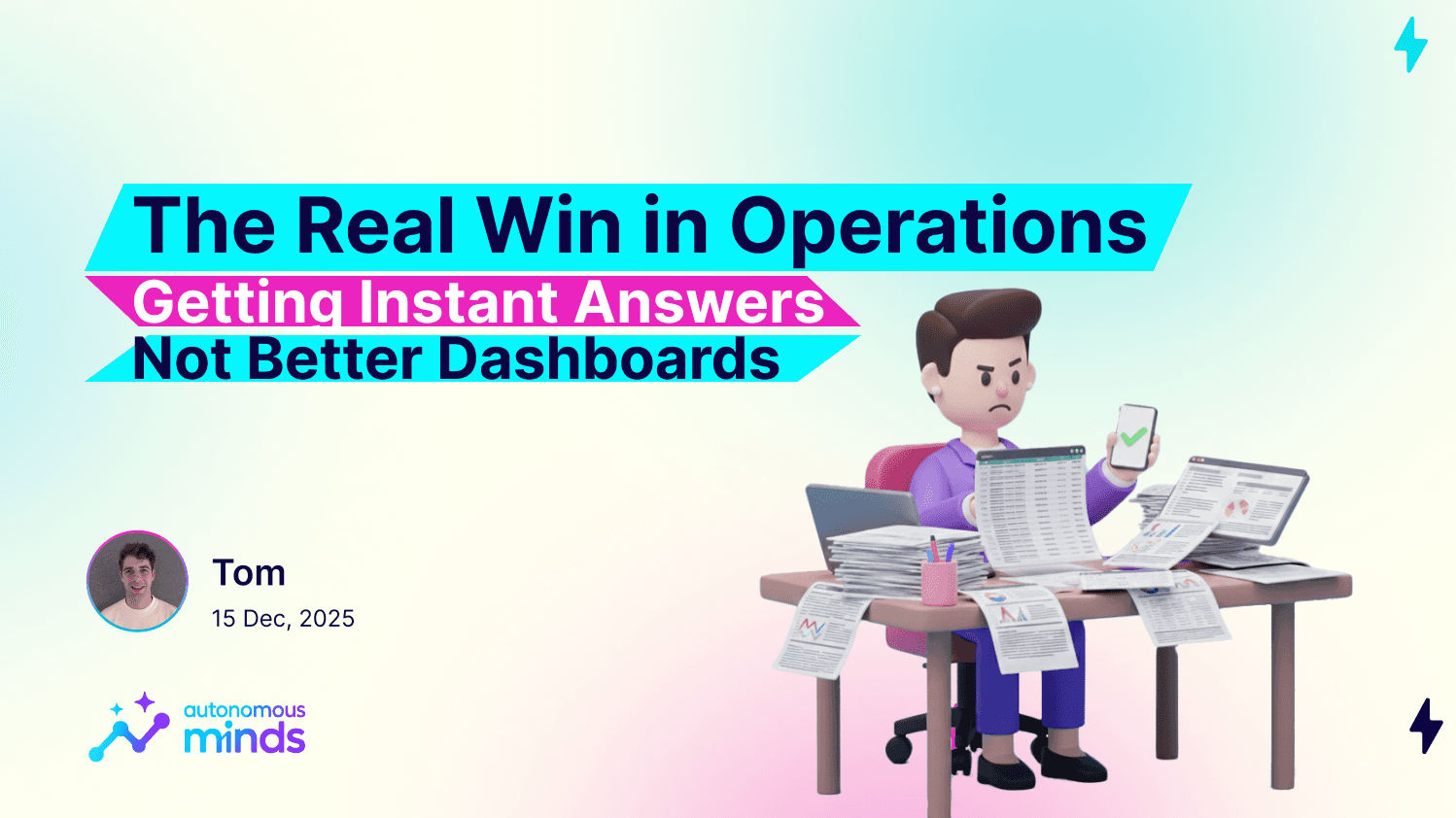
“Sit down every Monday and trawl through the numbers line by line. Forecasts, labour costs, delivery times, margins across 23 stores, week by week.”
That’s a very painful exercise.
And by the time you’ve found the problem, it’s already Tuesday. The moment’s passed. The conversation with the store manager happens too late to change anything.
His question wasn’t complicated: “Yesterday, which were my worst three stores? And when did it go wrong?”
Simple question. But in his current setup? That takes hours to answer. Multiple systems. Manual reconciliation. Exporting, pivoting, squinting at Excel. etc

The Two Data Worlds Problem
Here’s what makes operations annoying: the data is never in one place.
This guy has brand data in one system - performance metrics, speed of service, forecasting accuracy. That’s controlled by head office.
Then he has his actual financials in another system - P&L, costs, margins, labour. That’s his.
These two worlds don’t talk to each other.
So the real question - “are we actually making money?” - requires a human to stitch it together manually.
That human is usually the ops leader. Or one overworked analyst. And they’re spending 80% of their time answering “what happened?” instead of “what should we do about it?”
What “Good Enough” Actually Costs
Most ops teams don’t feel broken, just incredibly l busy.
The reports get done. The meetings happen and decisions eventually get made.
But the hidden cost is time.
And the really hidden cost? The questions that never get asked because they’d take too long to answer.
“Is this a one-week blip or a two-week trend?” “Which stores are slipping and why?” “What should I actually focus on this month?”
These questions die in the gap between “I’d like to know” and “I have time to find out.”


What Changes When Anyone Can Ask
The shift isn’t about better BI tools. It’s about who can get answers.
Right now, most operational questions flow through a bottleneck - an analyst, a report request, a ticket in the queue. The ops leader waits. The analyst scrambles. The answer arrives too late to matter.
What if the ops leader could just ask?
Not learn a new tool. Not build a dashboard. Not wait for someone else.
Just ask: “Which stores had the worst performance yesterday and when?” And get an answer in seconds, in plain English, with the context to actually do something about it.
That’s what we built Milo for.
Not to replace analysts - but to let operators self-serve on the questions that shouldn’t need a ticket.
The simple stuff. The urgent stuff. The “I need this before my 9am call” stuff.
The Real Win Isn’t Efficiency
Back to the guy with 23 stores.
He’s not buying a BI tool. He’s not even buying speed, really.
He’s buying relevance.
He’s been in this industry for 30 years. He knows the game is changing. And he doesn’t want to be the one still trawling through spreadsheets while everyone else is asking questions and getting instant answers.
That’s not about technology. That’s about staying in the conversation.
The Takeaway
If your ops function runs on Monday morning data archaeology, it won’t scale.
If every “simple” question requires an analyst and a two-day turnaround, you’re not running operations - you’re running a queue.
The ops leaders who pull ahead aren’t the ones with the best dashboards. They’re the ones who can ask a question and get an answer before the moment passes.
That’s what we’re building at Milo. A way for operations leaders to get the answers they need, in the moment they need them, without learning a new tool or waiting in line.
Because the question isn’t “do you have enough data?”
The question is: can you get to what matters fast enough to actually do something about it?